 Feronerie & Configurator
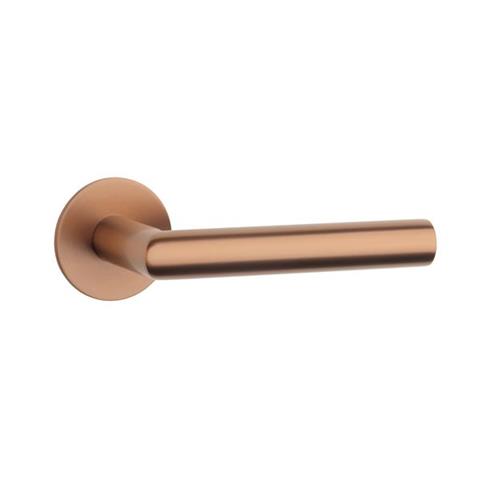
PZ, BB and WC describe the type of opening in the lower rosette (the one that sits over the lock). Each type of lock needs a rosette that matches what comes through it: a cylinder, a key or a privacy turn button.
In practice, the code tells you what the rosette will face once it is on the door. That is why, when you order a complete set, you choose the handle, the finish and the function of the rosette (PZ, BB or WC).
PZ stands for “profile cylinder” — the euro-profile cylinder used by most modern interior doors and entrance doors. The PZ rosette has an oval opening shaped exactly like the cylinder profile.
Choose PZ if your door locks with a cylinder-type key (the thin key with teeth along one edge). It is the most common option for lockable interior doors.
BB comes from “Buntbart” — the classic bit key with a large bit (the old-fashioned key with a single wide tooth). The BB rosette has a round opening with a small slot at the bottom for the bit of the key.
Choose BB for older doors, or for doors fitted with a simple mortise lock operated by a classic key rather than a cylinder.
WC is the rosette for bathroom or toilet doors. Instead of a key, it has a privacy turn button on the inside (you rotate it to lock) and an emergency release slot on the outside, which can be opened with a coin or a screwdriver in case of emergency.
Choose WC for any bathroom, toilet or dressing-room door — anywhere you want to lock yourself in from the inside, without a key.
The question is simple: how does the door lock?
| How the door locks | Rosette code |
|---|---|
| With a cylinder key (modern euro cylinder) | PZ |
| With a classic bit key | BB |
| Bathroom / toilet — privacy turn on the inside | WC |
| Does not lock at all (bedroom, hallway) | plain (blind) rosette |
If you are not sure which lock you have, take out a key and look at what comes through the door — or send us a photo and we will help you choose.
Enger rosettes for cylinder, key or bathroom — in every finish, matched to the handles.