 Feronerie & Configurator
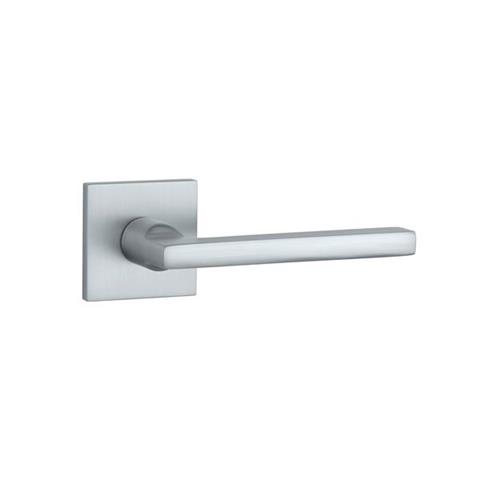
The rosette is the small plate mounted on the door that supports the handle (lever) and, separately, the keyhole. In effect, it replaces the old long backplate with two discreet pieces: one under the handle and one under the key or cylinder.
Its role is twofold: functional (it supports the handle and conceals the mechanism) and aesthetic (it defines the final look of the door).
The most widespread. A classic-modern look that suits almost any door and interior style.
Versatile
A more contemporary, geometric look. Ideal in modern, minimalist interiors with clean, straight lines.
Modern
The shape of the rosette is a matter of style — both versions serve the same function. What matters is matching it to the rest of the interior (furniture, hinges, light switches).
“Slim” refers to the thickness of the rosette — how far it rises from the surface of the door. The thinner it is, the more discreet and modern the look.
| Thickness | Look | Recommendation |
|---|---|---|
| Slim 5 mm | Very discreet, barely raised | Minimalist interiors, refined doors |
| Slim 7 mm | Discreet, robust | The most popular choice, a perfect balance |
Beyond shape and thickness, the lower rosette has a function determined by the type of lock: PZ (cylinder), BB (classic key) or WC (bathroom, with a thumb-turn latch).
We explained these codes in detail in the guide What PZ, BB and WC mean on rosettes — well worth reading before you order.
Round for versatility, square for a modern, geometric look.
7 mm for balance (the most popular) or 5 mm for maximum discretion.
PZ, BB or WC, depending on how the door locks.
The same finish as the handle: matte black, chrome, nickel, titanium, gold or light brown.
Enger rosettes, round and square, slim 5 and 7 mm, in every finish and function.